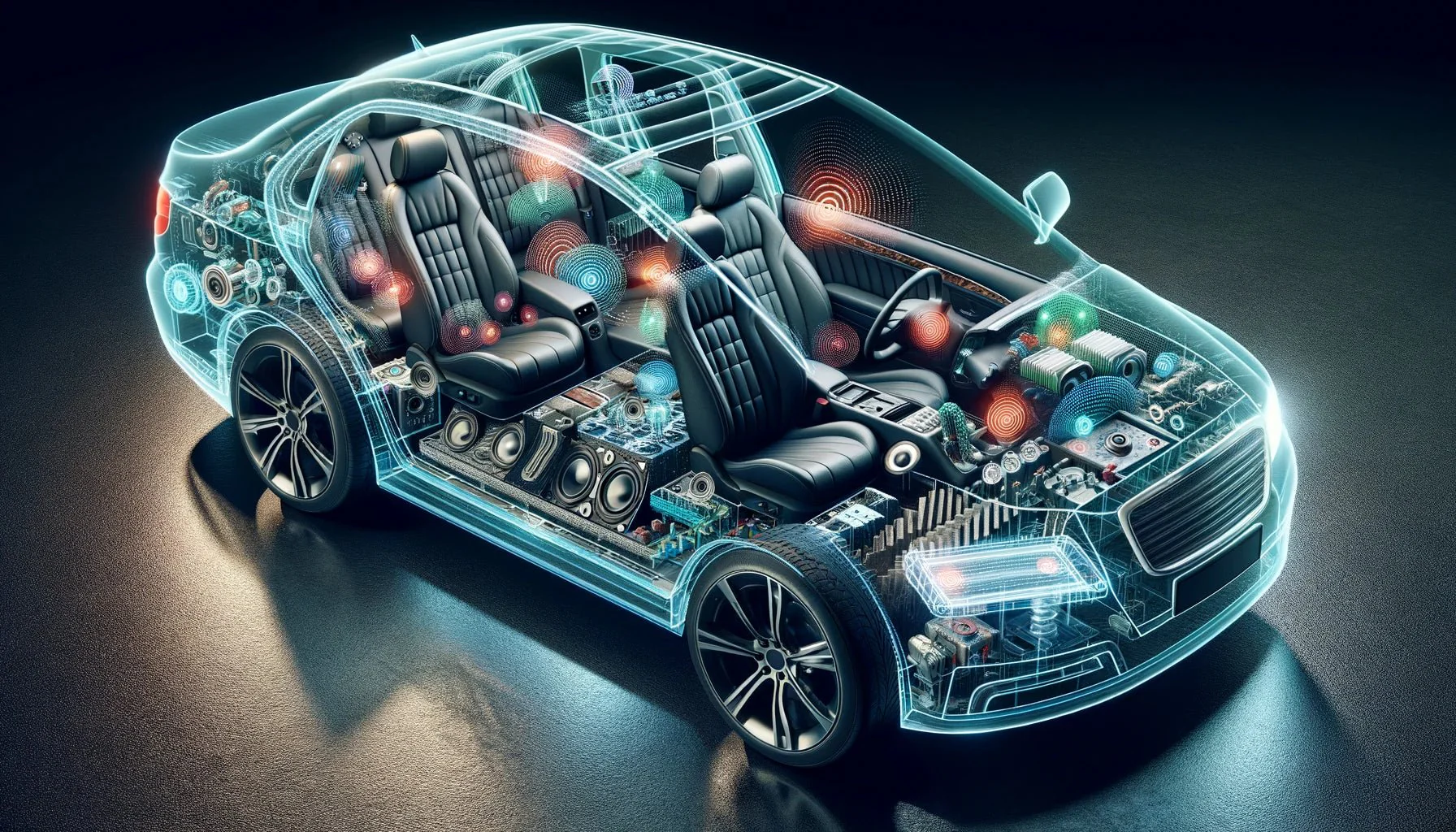
For many drivers, a car isn’t just a mode of transportation — it’s a personal sanctuary, a mobile concert hall, and a space to escape the outside world. And at the heart of that experience is the car audio system.
Modern Car Audio Systems and Upgrades has come a long way from the basic AM/FM radios of the past. Today, advanced sound technology, high-fidelity speakers, and smart connectivity features allow drivers to enjoy studio-quality sound on the go. Whether you’re a casual music listener or a dedicated audiophile, upgrading your car’s audio system can dramatically enhance your driving experience.
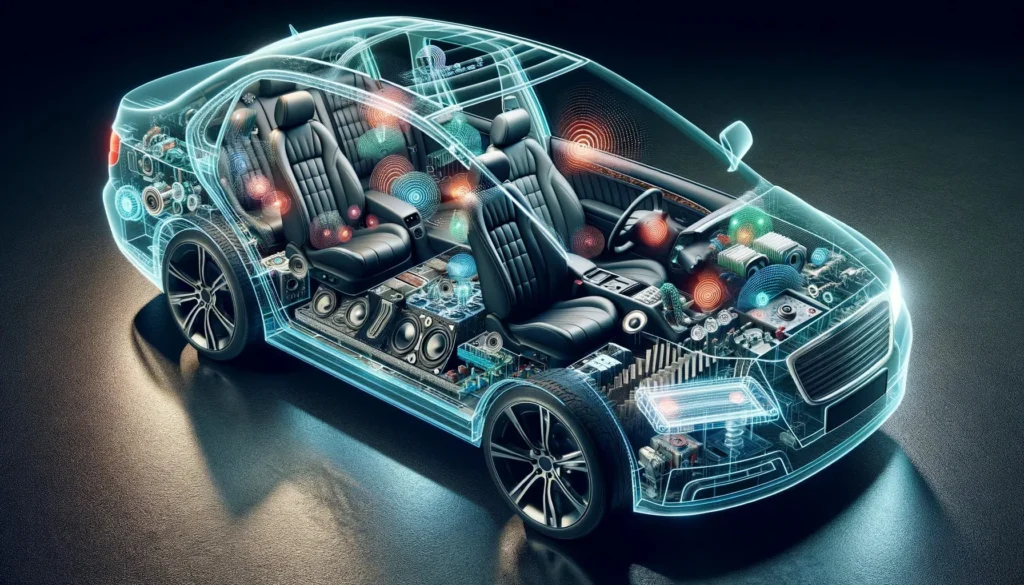
Key Takeaways Car Audio Systems and Upgrades
- Car Audio Systems and Upgrades play a crucial role in delivering a high-quality listening experience.
- Understanding the science of sound waves and their behavior in the car’s cabin is essential for optimizing the audio system.
- Proper speaker placement, sound damping, and equalization can significantly enhance the overall audio performance.
- Investing in quality Car Audio Systems and Upgrades, such as amplifiers, subwoofers, and signal processors, can further improve the sound quality.
- Regular maintenance and customization of the audio system can help maintain and improve the driving experience.
The Evolution of Car Audio Technology
The earliest car radios in the 1930s were revolutionary for their time, but they were limited to simple AM broadcasts. Over the decades, FM radio, cassette players, CD changers, and MP3 compatibility entered the scene, each advancing audio quality and music accessibility.
Today, Car Audio Systems and Upgrades have evolved into integrated infotainment centers, combining:
Lossless audio playback for uncompromised music quality
High-definition touchscreens
Bluetooth and wireless streaming
Voice-activated assistants (Siri, Google Assistant, Alexa)
Digital audio processing (DSP) for fine-tuned sound
Why Car Audio Systems and Upgrades?
Factory-installed systems have improved, but they often prioritize cost efficiency over premium sound. Car Audio Systems and Upgrades can:
- Enhance sound clarity with better speakers and amplifiers
- Boost bass and depth with subwoofers
- Improve connectivity with Apple CarPlay, Android Auto, and wireless streaming
- Customize audio profiles for different genres or listening preferences
- Increase resale value with a modernized interior
For music lovers, it’s not just about volume — it’s about detail, richness, and immersion.
How Sound Waves Travel
Ever wondered why your favorite song sounds so different in your car compared to your home audio system? It’s all about acoustics, the science of how sound behaves in a particular space. In a car, sound waves have a limited space to move around, which can either make your music sound like a dream or a bit of a nightmare. Sound waves can bounce off surfaces, get absorbed, or even get distorted, and the shape of your car, the materials inside, and the position of your speakers can all affect how they behave.
Core Components of a High-Quality Car Audio Systems and Upgrades
A complete car audio upgrade often involves several key components working together for optimal sound:
1. Head Unit (Stereo or Receiver)
The brain of your audio system, responsible for audio processing, input selection, and connectivity.
Modern options include:
Built-in DSP for sound customization
Large HD touchscreens
Navigation systems
Support for Apple CarPlay & Android Auto
2. Speakers
Upgrading factory speakers can drastically improve sound clarity and balance. Speaker types include:
Component Speakers – Separate woofers, tweeters, and crossovers for superior sound separation.
Coaxial Speakers – All-in-one speakers that are easy to install and good for general upgrades.
3. Amplifiers
Amplifiers provide the power needed to drive speakers and subwoofers at their full potential without distortion. A dedicated amp ensures music remains clean and powerful at high volumes.
4. Subwoofers
For those who want deep, resonant bass, a subwoofer is essential. Options range from compact under-seat subs to large, enclosed units for maximum low-end impact.
5. Digital Signal Processor (DSP)
A DSP fine-tunes sound by adjusting time alignment, equalization, and crossover points, creating a perfectly balanced listening environment inside your vehicle.
Popular Car Audio Systems and Upgrades Paths
Stage 1 – Basic Enhancement
Replace factory speakers with higher-quality aftermarket options for cleaner mids and highs.
Stage 2 – Amplification & Bass
Add a 4-channel amplifier to power upgraded speakers and a compact subwoofer for richer sound.
Stage 3 – Full Audiophile Build
Upgrade the head unit, speakers, amps, and subwoofers, plus a DSP for precise sound staging and tuning.
Car Audio Systems and Upgrades Integration
Modern upgrades don’t mean losing factory features. Many installers specialize in OEM integration, allowing you to retain steering wheel controls, backup camera feeds, and built-in vehicle systems while upgrading sound quality.
The Role of Connectivity in Car Audio
Beyond sound quality, today’s Car Audio Systems and Upgrades emphasize seamless connectivity:
- Bluetooth streaming for wireless music and calls
- USB & AUX inputs for direct device connections
- Streaming service integration (Spotify, Apple Music, Tidal)
- Voice control for hands-free operation
With the rise of wireless CarPlay and Android Auto, drivers can access navigation, messaging, and music without plugging in their phones.
Soundproofing – The Hidden Upgrade
Even the best audio system can be compromised by road noise and vibration. Sound-deadening materials like Dynamat or HushMat reduce unwanted noise, letting your upgraded system truly shine.
Installation and Professional Tuning
A great Car Audio Systems and Upgrades isn’t just about the components — it’s about proper installation and tuning. Professional installers can:
- Ensure correct wiring and safe power management
- Optimize speaker placement
- Calibrate audio using DSP for your car’s unique acoustics
Car Audio Systems and Upgrades Trends and the Future
As technology advances, we’re seeing exciting innovations in car audio:
- 3D surround sound and spatial audio
- Integrated AI audio optimization that adapts to road and cabin conditions
- Hi-Res audio streaming directly from music platforms
- Vehicle-specific tuning profiles from manufacturers and aftermarket brands
With the rise of electric vehicles, manufacturers are focusing even more on premium in-car audio since EV cabins are quieter, making high-quality sound more noticeable.
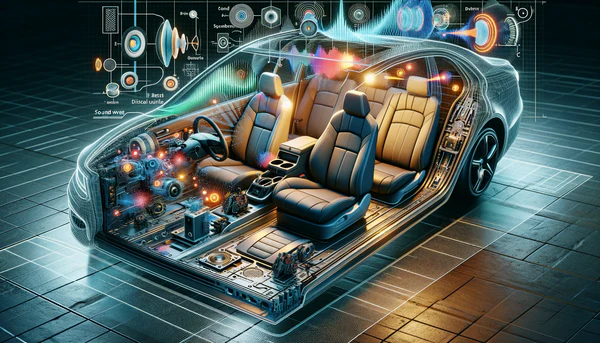
Key Takeaways – Car Audio Systems and Upgrades
Future trends point toward immersive, intelligent, and fully connected audio experiences.
Modern Car Audio Systems and Upgrades go beyond basic radios, offering HD sound, smart connectivity, and customization.
Upgrading components like speakers, amplifiers, and subwoofers can significantly improve audio clarity and depth.
DSPs and professional tuning maximize your investment by tailoring sound to your vehicle.
Cabin Design and Sound Reflection
The shape and materials used in your car’s cabin can affect how sound waves bounce off surfaces. Proper cabin design minimizes reflections and echoes, resulting in clearer, more immersive sound. By strategically placing sound-absorbing materials, we can reduce unwanted sound reflections and create a more harmonious acoustic environment within your vehicle.
Soundproofing Car Audio Systems and Upgrades
Effective soundproofing plays a crucial role in enhancing your car’s audio optimization. By reducing outside noise and vibrations, we can create a quieter cabin, allowing you to enjoy your music without interference. Proper car soundproofing techniques can make a significant difference in your overall audio experience.
Speaker Placement Car Audio Systems and Upgrades
The placement of speakers within your car is critical to achieving an optimal listening experience. Correct positioning ensures that sound reaches all passengers evenly, creating an immersive and balanced audio experience. By carefully considering the speaker placement, we can maximize the potential of your car’s audio acoustics.
Understanding Sound Waves and Car Acoustics
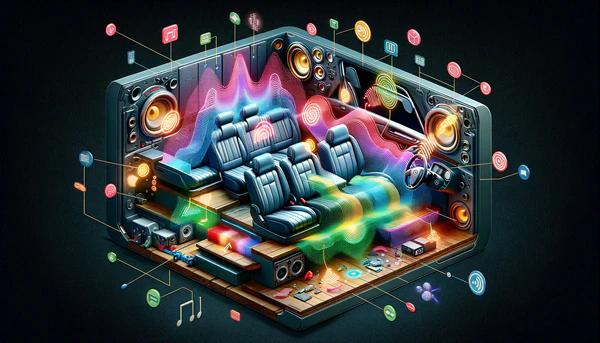
In simple terms, Car Audio Systems and Upgrades acoustics is the science of how sound behaves in the unique space of an automobile. As we venture into our vehicles, we find ourselves surrounded by seats, dashboards, windows, and a myriad of nooks and crannies – a veritable playground for sound waves. These waves, which are essentially vibrations traveling through the air, can bounce off surfaces, get absorbed, or even become distorted as they navigate the limited confines of our cars.
The shape of our car, the materials used in the interior, and the positioning of our speakers all play a crucial role in how these sound waves behave. In this Car Audio Systems and Upgrades acoustics environment, the waves have a pretty restricted space to move around, which can either create a dream-like listening experience or, well, a bit of a nightmare.
Understanding the acoustic science behind in-vehicle acoustics is the key to unlocking the full potential of our Car Audio Systems and Upgrades systems. By gaining insights into how sound waves interact with the various elements of our cars, we can optimize our audio setup and enjoy music the way it was meant to be heard, even on the open road.
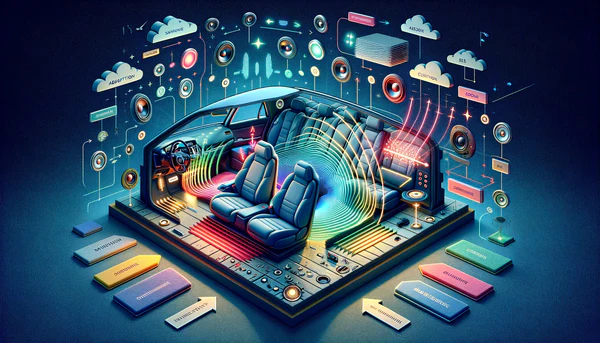
The Role of Car Materials in Sound Quality
When it comes to creating an exceptional Car Audio Systems and Upgrades experience, the materials used in your vehicle’s interior play a crucial role. These materials don’t just affect how swanky your ride looks; they also have a significant impact on how your music sounds. Understanding the interplay between hard surfaces, soft materials, and the overall acoustic environment is key to unlocking the full potential of your car’s audio system.
Hard Surfaces and Reflection Car Audio Systems and Upgrades
Hard surfaces like glass windows and metal panels are great at reflecting sound waves. That might sound like a good thing, but too much reflection can make your music sound like it’s coming from inside a tin can. The bouncing and echoing of sound waves can create an unpleasant, distorted audio experience, making it difficult to enjoy your favorite tunes.
Soft Materials and Absorption Car Audio Systems and Upgrades
On the flip side, softer materials like fabric seats, carpeting, and even those fluffy dice hanging from your rearview mirror can absorb sound waves. This absorption can help to reduce echoes and make your music sound clearer and more defined. However, going overboard with soft materials can also lead to a muffled and muted sound, depriving you of the full sonic experience.
Achieving the Right Balance Car Audio Systems and Upgrades
The key to creating the perfect acoustic environment in your car is to strike the right balance between hard and soft materials. The ideal car interior would have a harmonious mix of surfaces, where the hard elements like windows and panels are balanced by the sound-absorbing properties of softer materials. This balance helps to tame unwanted reflections while still allowing the audio to shine, delivering a well-rounded and immersive listening experience.
Tweeters, Midranges, and Woofers: A Deep Dive
Most Car Audio Systems and Upgrades feature a range of speakers that handle different parts of the sound spectrum. We’ve got our tweeters for the high frequencies, midranges for the mid-range frequencies, and woofers for those deep bass notes. Each component plays a crucial role in delivering a well-rounded, immersive audio experience within your vehicle.
Tweeters for High Frequencies Car Audio Systems and Upgrades
Tweeters are responsible for reproducing the high-frequency sounds, such as the crisp crash of cymbals or the soaring high notes in a Mariah Carey song. These small, specialized Car Audio Systems and Upgrades speakers are designed to handle the upper end of the audio frequency range, typically from 2,000 Hz to 20,000 Hz, ensuring that your music retains its clarity and sparkle.
Midranges for Mid-Range Frequencies
The midrange speakers in your Car Audio Systems and Upgrades are the workhorses, handling the middle part of the sound spectrum. This is where you’ll find the bulk of the instrumentation and vocals, ranging from around 250 Hz to 4,000 Hz. Midranges ensure that the heart of your music, from the powerful guitar riffs to the emotive vocals, is reproduced with precision and balance.
Woofers for Low Frequencies Car Audio Systems and Upgrades
The real heavyweights in your car’s audio system are the woofers, responsible for those deep, rumbling low frequencies. Typically ranging from 20 Hz to 250 Hz, woofers are the ones that make you feel the bass in your chest, adding depth and power to your music. Whether it’s the thunderous kick drum or the bone-shaking bass lines, woofers are the big kahunas that bring the low-end magic to your in-Car Audio Systems and Upgrades
Tweeters, midranges, and woofers work together in perfect harmony, like a well-oiled machine, to deliver a comprehensive and immersive soundscape within your vehicle. By understanding the specific audio frequency ranges and audio component functions of each speaker type, you can optimize your car’s audio system for the ultimate listening pleasure on the road.
The Importance of Equalization
Equalization, or ‘EQ’, is the fine-tuning of your Car Audio Systems and Upgrades equalization system, like the seasoning in a dish – a little can go a long way in enhancing the flavors, or in this case, the sounds. Understanding the audio frequency ranges is crucial, as you’ve got your lows (20-250 Hz), mids (250-4k Hz), and highs (4k-20k Hz), each with its own characteristics and role in how we perceive sound.
Low Frequencies: Kick Drums vs. 808s
If you’re into rock or live band performances, you’ll notice the kick drum packs a punch but doesn’t rumble, as it usually occupies the 50-100 Hz range. On the other hand, if you’re a hip-hop or electronic music fan, you’re probably familiar with the deep, lingering rumble of an 808, which can go as low as 20-30 Hz.
Mid Frequencies: The Heart of the Music
The midrange is where most of the action happens, with vocals, guitars, and pianos, but be careful with the 3k Hz area as boosting it too much can make your music sound harsh.
High Frequencies: Clarity or Piercing?
High frequencies give your music clarity and sparkle, but too much emphasis around 8k-12k Hz can make it sound piercing and fatiguing.
Musical Tastes and Customization
Different genres of music benefit from different audio EQ tuning settings, so the key is to experiment and find what sounds best to you. Adjusting the low-frequency sound, mid-frequency sound, and high-frequency sound can significantly impact the overall music genre preferences and audio customization within your car.
Car Audio Systems and Upgrades – Transform Your Driving Experience
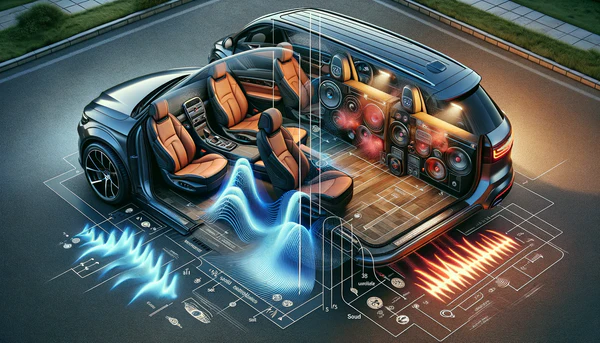
A car is more than just a way to get from one place to another. For many drivers, it’s a personal retreat — a space to enjoy music, podcasts, and entertainment while on the move. The Car Audio Systems and Upgrades is central to that experience.
From the earliest AM radios to today’s high-tech, multi-speaker surround setups, Car Audio Systems and Upgrades has evolved into an art and a science. Whether you’re a casual listener who wants cleaner sound or an audiophile seeking studio-level performance, upgrading your car audio system can completely transform your driving experience.
The History and Evolution of Car Audio Technology
The journey of Car Audio Systems and Upgrades began in 1930 with the introduction of the first commercially available car radio, the Motorola 5T71. At the time, it was revolutionary — bringing music and news into cars for the first time. But these early systems were bulky, expensive, and limited to AM broadcasts.
Over the decades, new technologies reshaped in-car entertainment:
Today – Infotainment Systems: Large touchscreens, voice assistants, navigation, and high-fidelity sound.
1950s – FM Radio: Better sound quality and less static than AM.
1960s – 8-Track Tapes: Portable music collections became possible.
1970s–1980s – Cassette Players: More compact, better audio, and the ability to record mixes.
1980s–1990s – Compact Discs (CDs): Digital sound with superior clarity.
2000s – MP3 Players & Aux Inputs: Digital convenience and massive music storage.
2010s – Bluetooth & Streaming: Wireless music, hands-free calls, and integrated apps.
Why Consider Car Audio Systems and Upgrades?
Factory-installed systems have improved dramatically, with many modern cars offering premium audio options from brands like Bose, Harman Kardon, Bang & Olufsen, or Meridian. Still, they are often designed with cost and weight efficiency in mind, rather than delivering the best possible sound.
Upgrading your system can:
Future-proof your vehicle with the latest technology.
Enhance clarity — crisp vocals, distinct instruments, and richer details.
Increase bass depth without distortion.
Boost volume capacity while keeping audio clean.
Add modern features like CarPlay, Android Auto, and lossless playback.
Personalize sound for your music taste.
Key Components of a Modern Car Audio Systems and Upgrades
Upgrading your car’s audio usually means improving multiple components to work in harmony.
1. Head Unit (Receiver or Stereo)
The head unit is the command center of your car’s audio system. It handles source input, audio processing, and system control.
Modern upgrades can include:
Voice control integration.
Touchscreen interfaces with navigation.
Apple CarPlay and Android Auto support.
Multiple preamp outputs for adding amps and subs.
High-resolution audio playback (FLAC, ALAC).
2. Speakers
Speakers turn electronic signals into the sound you hear. Most cars use budget-friendly speakers that lack depth and clarity.
Upgrade options include:
- Coaxial speakers: All-in-one units (woofer + tweeter) — easy to install and budget-friendly.
- Component speakers: Separate tweeters, woofers, and crossovers for superior imaging and sound staging.
Premium brands like Focal, JL Audio, Hertz, and Infinity produce speakers known for exceptional accuracy and tonal balance.
3. Amplifiers (Amps)
Amplifiers provide the necessary power for speakers and subwoofers. Without enough power, music can sound flat or distorted at higher volumes.
Types of car amplifiers:
Monoblock amps: Dedicated power for subwoofers.
4-channel amps: Power front and rear speakers.
5-channel amps: Power speakers + a subwoofer.
4. Subwoofers
A subwoofer handles low-frequency bass notes that smaller speakers can’t reproduce effectively. Adding a subwoofer brings music to life — from deep hip-hop beats to cinematic soundtracks.
Common options:
- Powered subwoofers: Built-in amp, compact design, easy to install.
- Component subwoofers: Require a separate amp, offer more customization.
5. Digital Signal Processor (DSP)
A DSP allows precise tuning of your system to match your car’s unique acoustics. It adjusts:
- Time alignment (so all sounds reach your ears simultaneously).
- Equalization (boosting or cutting certain frequencies).
- Crossovers (sending the right sounds to the right speakers).
| Feature | Sealed Subwoofer Enclosures | Ported Subwoofer Enclosures |
|---|---|---|
| Bass Response | Tight and accurate | Higher overall volume |
| Low-Frequency Extension | Slightly limited | Deeper bass response |
| Space Requirement | Smaller enclosure size | Larger enclosure size |
| Efficiency | Higher efficiency | Lower efficiency |
Regardless of your preference, choosing the right car subwoofers and optimizing their subwoofer placement can make a significant difference in your overall bass performance. By exploring the options and understanding the trade-offs, you can achieve the perfect bass experience in your vehicle.
Tips for DIY Sound Optimization
If you’re a hands-on kind of person who loves a good DIY project, we’ve got some tips to help you optimize your car’s audio optimization system yourself. The angle and positioning of your speaker positioning can make a huge difference, so try angling them towards the listener for a more direct sound. Most modern Car Audio Systems and Upgrades come with adjustable audio crossover settings, allowing you to control which frequencies go to which speakers, ensuring that each speaker plays only the sounds it’s best at reproducing.
Additionally, always keep a playlist of test tracks on hand to help you fine-tune your system and ensure that it delivers the best possible audio customization experience. These test tracks can help you identify any problem areas in your setup and make the necessary adjustments to achieve the perfect sound.
Popular Car Audio Upgrade Paths
Entry-Level Upgrade (Stage 1)
- Replace factory speakers with high-quality coaxial or component speakers.
- Add sound-deadening material to doors.
Mid-Level Upgrade (Stage 2)
- Add a 4-channel amp for cleaner power.
- Install a compact subwoofer for bass depth.
- Upgrade the head unit for better audio control and connectivity.
Full Audiophile System (Stage 3)
Premium subwoofer enclosure.
High-end component speakers with separate tweeters.
Multiple amplifiers (dedicated for speakers and subwoofer).
DSP for perfect tuning.
Integration with Factory Systems
Modern cars often have integrated electronics — backup cameras, steering wheel controls, and built-in climate controls. Good installers use OEM integration modules to preserve these functions while upgrading sound quality.
Car Audio Trends and the Future
Looking forward, several innovations are shaping the future of in-car audio:
- Immersive 3D and spatial audio for cinematic experiences.
- Adaptive AI tuning that adjusts sound in real time based on speed and cabin noise.
- Fully wireless audio systems for cleaner installations.
- Personalized listening profiles linked to driver recognition systems.
- Hi-Res audio streaming over 5G for lossless quality on the go.
With electric vehicles dominating the horizon, cabins are becoming quieter, allowing premium audio systems to truly shine.
Key Takeaways – Car Audio Systems and Upgrades
- Upgrading car audio is about more than just loudness — it’s about clarity, depth, and personal connection to music.
- A complete system involves a balanced combination of speakers, amplifiers, subwoofers, and digital tuning.
- Soundproofing and professional installation are just as important as the components themselves.
- The future promises more immersive, connected, and intelligent car audio experiences.
Conclusion Car Audio Systems and Upgrades
Understanding the science of sound and Car Audio Systems and Upgrades acoustics can greatly enhance our driving experience. By investing in quality components, optimizing our car’s acoustics, and practicing regular maintenance, we can create a personalized audio haven within our vehicles. From comprehending the basics of sound waves to exploring the intricacies of equalization and acoustic treatments, this article has provided us with the knowledge and tools to unleash the full potential of our car’s audio system and enjoy an unparalleled listening experience on the road.
Whether we’re passionate about rock, hip-hop, or classical music, optimizing our car’s audio system can transform our daily commute or long road trips into an immersive, captivating journey. By mastering the principles of Car Audio Systems and Upgrades systems and upgrades, in-vehicle acoustics, audio optimization, and driving experience, we can elevate our overall driving experience to new heights.
As we continue to explore the fascinating world of car audio, let us embrace the power of sound and unlock the full potential of our vehicles. By understanding the role of acoustics and implementing strategic upgrades, we can create a mobile sanctuary where our favorite tunes come alive, elevating our daily drives and cementing our love for the open road.
Table of Contents
FAQ
What is the role of acoustics in enhancing Car Audio Systems and Upgrades performance?
Acoustics play a crucial role in the quality of sound within your car. The way sound waves interact with your car’s interior significantly impacts your listening experience. Proper acoustic design and treatments can minimize reflections, reduce outside noise, and ensure that sound reaches all passengers evenly, creating an immersive audio experience.
How do sound waves travel in a car?
Sound is a form of energy that travels in waves through the air. In a car, these waves are produced by the audio system and travel through the cabin to reach your ears. Sound waves consist of alternating high and low-pressure regions, and the frequency of the vibrations determines the pitch, while the amplitude affects the volume.
What are the main components of a Car Audio Systems and Upgrades system?
The main components of a Car Audio Systems and Upgrades system include the head unit, amplifiers, speakers, subwoofers, and equalizers. The head unit is the control center, the amplifiers boost the audio signal, the speakers convert electrical signals into sound, the subwoofers reproduce low-frequency sounds, and the equalizers allow you to fine-tune the audio.
How do different materials in a car’s interior affect sound quality?
The materials used in a car’s interior play a significant role in how sound waves behave. Hard surfaces like glass and metal panels reflect sound waves, which can create echoes and a tin-can-like sound. Soft materials like fabric and carpeting absorb sound waves, reducing echoes and creating a clearer audio experience. The ideal car interior would have a balance of both hard and soft materials to achieve the perfect acoustic environment.
What is the difference between tweeters, midranges, and woofers in a car audio system?
Tweeters are responsible for reproducing high frequencies, such as cymbals and high vocals. Midranges handle the middle part of the sound spectrum, including most instruments and vocals. Woofers are designed to reproduce low frequencies, such as bass, adding depth and richness to the audio experience. These speakers work together to deliver a well-rounded sound in a car.
How can equalization improve the sound quality in a car?
Equalization (EQ) allows you to fine-tune the audio by adjusting specific frequency bands. Understanding the low, mid, and high-frequency ranges and how they affect different genres of music is crucial. Adjusting the EQ settings can help you enhance the desired frequencies and create a more balanced and personalized sound within your car.
What are some common acoustic treatments for cars?
Common acoustic treatments for cars include sound deadening, bass traps, and diffusers. Sound deadening materials reduce vibrations and outside noise, creating a cleaner sound environment. Bass traps absorb low-frequency sounds to prevent them from bouncing around, while diffusers scatter sound waves to reduce echoes and hotspots.
Why is an amplifier important for a car audio system?
Amplifiers are essential for delivering high-quality, clear, and detailed sound in a car. They boost the audio signal, providing the necessary power for your speakers to perform at their best, even at high volumes. Different types of amplifiers, such as mono amps for subwoofers and multi-channel amps for speakers, can be used to optimize the system.
How does subwoofer placement and enclosure type affect bass performance?
The placement of the subwoofer and the type of enclosure (sealed or ported) can significantly impact the bass performance in a car. Trunk placement often provides a more spacious sound, while under-seat subs offer a more direct bass experience. Sealed enclosures deliver tight, accurate bass, while ported ones provide more volume and a deeper low-end response.
What are some DIY tips for optimizing a car’s audio system?
Some DIY tips for optimizing a car’s audio system include adjusting the angle and positioning of the speakers for a more direct sound, utilizing the crossover settings to control frequency distribution, and keeping a playlist of test tracks on hand to fine-tune the system for the best possible audio experience.